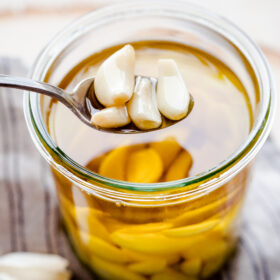
Homemade Garlic Confit and Garlic Oil
A simple tutorial for how to make garlic confit and homemade garlic oil at home! This delicious kitchen staple will take your dishes to the next level! Since the garlic cloves are already cooked and soft, mash the garlic cloves on top of bread for a delicious spread or garlic bread, or add them to dips, sauces, spreads, or roasted vegetables! Food Safety Note and Disclaimer: Garlic is a low-acid ingredient, and if stored improperly in oil (without oxygen) and in warm temperatures (at room temperature), it can produce a very serious toxin that causes botulism. Homemade garlic confit and garlic oil should always be made and immediately stored in the refrigerator for food safety reasons. Per food safety guidelines [http://postharvest.ucdavis.edu/files/251548.pdf], it is recommended that you use them within 4 days of making - but if prepared and stored properly, they can often keep for several weeks in the refrigerator. Please use your own discretion.
View Recipe
Crispy Garlic Chips
How to Make Crispy Garlic Chips - an easy, no-fuss tutorial on how to make crispy garlic chips at home, and ways to incorporate them into your cooking repertoire!
View Recipe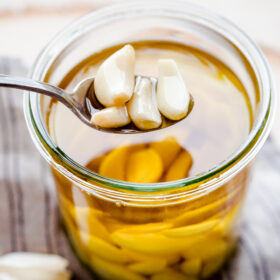
Homemade Garlic Confit and Garlic Oil
A simple tutorial for how to make garlic confit and homemade garlic oil at home! This delicious kitchen staple will take your dishes to the next level! Since the garlic cloves are already cooked and soft, mash the garlic cloves on top of bread for a delicious spread or garlic bread, or add them to dips, sauces, spreads, or roasted vegetables! Food Safety Note and Disclaimer: Garlic is a low-acid ingredient, and if stored improperly in oil (without oxygen) and in warm temperatures (at room temperature), it can produce a very serious toxin that causes botulism. Homemade garlic confit and garlic oil should always be made and immediately stored in the refrigerator for food safety reasons. Per food safety guidelines [http://postharvest.ucdavis.edu/files/251548.pdf], it is recommended that you use them within 4 days of making - but if prepared and stored properly, they can often keep for several weeks in the refrigerator. Please use your own discretion.
View Recipe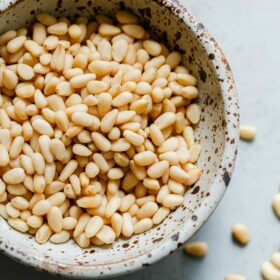
Toasted Pine Nuts
A simple guide on how to toast pine nuts in the oven, toaster oven, or in a dry skillet on the stove. Toasted until golden and fragrant, I love adding pine nuts to pasta, including traditional and arugula pesto [https://www.abeautifulplate.com/arugula-pesto-pasta/], and tossing them onto leafy salads and cooked grains for added texture and flavor. While the dry skillet method is faster, the oven method is my preferred method as it requires less of a watchful eye and leads to more evenly toasted nuts. See the note section below for more tips.
View Recipe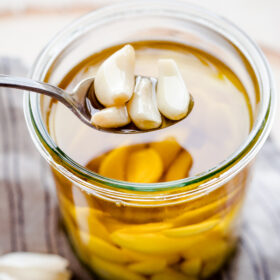
Homemade Garlic Confit and Garlic Oil
A simple tutorial for how to make garlic confit and homemade garlic oil at home! This delicious kitchen staple will take your dishes to the next level! Since the garlic cloves are already cooked and soft, mash the garlic cloves on top of bread for a delicious spread or garlic bread, or add them to dips, sauces, spreads, or roasted vegetables! Food Safety Note and Disclaimer: Garlic is a low-acid ingredient, and if stored improperly in oil (without oxygen) and in warm temperatures (at room temperature), it can produce a very serious toxin that causes botulism. Homemade garlic confit and garlic oil should always be made and immediately stored in the refrigerator for food safety reasons. Per food safety guidelines [http://postharvest.ucdavis.edu/files/251548.pdf], it is recommended that you use them within 4 days of making - but if prepared and stored properly, they can often keep for several weeks in the refrigerator. Please use your own discretion.
View Recipe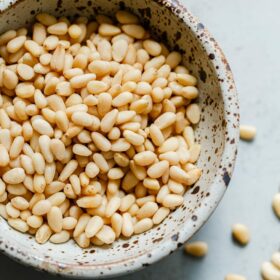
Toasted Pine Nuts
A simple guide on how to toast pine nuts in the oven, toaster oven, or in a dry skillet on the stove. Toasted until golden and fragrant, I love adding pine nuts to pasta, including traditional and arugula pesto [https://www.abeautifulplate.com/arugula-pesto-pasta/], and tossing them onto leafy salads and cooked grains for added texture and flavor. While the dry skillet method is faster, the oven method is my preferred method as it requires less of a watchful eye and leads to more evenly toasted nuts. See the note section below for more tips.
View Recipe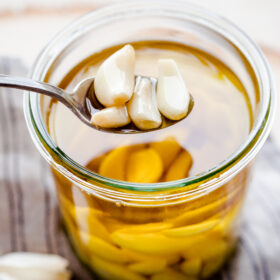
Homemade Garlic Confit and Garlic Oil
A simple tutorial for how to make garlic confit and homemade garlic oil at home! This delicious kitchen staple will take your dishes to the next level! Since the garlic cloves are already cooked and soft, mash the garlic cloves on top of bread for a delicious spread or garlic bread, or add them to dips, sauces, spreads, or roasted vegetables! Food Safety Note and Disclaimer: Garlic is a low-acid ingredient, and if stored improperly in oil (without oxygen) and in warm temperatures (at room temperature), it can produce a very serious toxin that causes botulism. Homemade garlic confit and garlic oil should always be made and immediately stored in the refrigerator for food safety reasons. Per food safety guidelines [http://postharvest.ucdavis.edu/files/251548.pdf], it is recommended that you use them within 4 days of making - but if prepared and stored properly, they can often keep for several weeks in the refrigerator. Please use your own discretion.
View Recipe